San Mateo County Market Update May 2026
Why Some Peninsula Homes Are Getting 20 Offers While Condos Sit Unsold
The Bay Area market is no longer moving as one, and understanding the difference matters more than ever.
One of the most important things I tell my clients today is this: there is no one “Bay Area market.” Two homes can hit the market in the same week, in the same city, and experience completely different outcomes. One receives fifteen offers and sells hundreds of thousands over asking. The other sits for weeks with little activity.
From the outside, that can feel confusing. But when you look closely at buyer behavior, affordability, and inventory levels, the pattern becomes much clearer. The Peninsula market has become deeply segmented, and understanding those differences is now one of the most important parts of building a successful buying or selling strategy.
Single-Family Homes Are Driving the Competition
The strongest segment of the market right now continues to be single-family homes, especially at the entry-level and mid-range price points throughout the Peninsula.
Inventory remains extremely limited, and buyers are back in force for these homes. In Foster City, San Mateo, and surrounding Peninsula communities, we are regularly seeing eight to twenty offers on well-positioned properties. In some cases, homes are selling four hundred thousand to eight hundred thousand dollars over the asking price. I have even heard of a few properties approaching nearly one million dollars over asking.
That kind of competition sounds dramatic, but it is important to understand what is actually driving it.
This is not broad market frenzy like we experienced during the post-pandemic years. Buyers are not throwing offers at everything. Instead, they are concentrating aggressively on the homes that feel like the best value relative to location, condition, and long-term livability. In today’s market, buyers know exactly what they want. When they find it, they move decisively.
Pricing and Positioning Matter More Than Ever
Even within the strong single-family home market, not every property succeeds automatically. Homes still need to be priced competitively and positioned correctly relative to buyer expectations. Condition matters. Presentation matters. Location matters. Most importantly, pricing matters.
Today’s buyers are analytical. They are studying comparable sales, monthly payment changes, and overall value very carefully. If a home feels overpriced relative to the market, many buyers simply move on instead of negotiating. That is one of the biggest shifts I am seeing right now.
In previous years, buyers might still submit offers below asking to start a conversation. Today, many do not even engage if the pricing feels disconnected from market reality. Buyers interpret overpricing as a signal that the seller may not be serious or realistic, and they do not want to waste time pursuing a transaction that feels unlikely to come together. The market today rewards precision.
Condos Are Facing a Very Different Reality
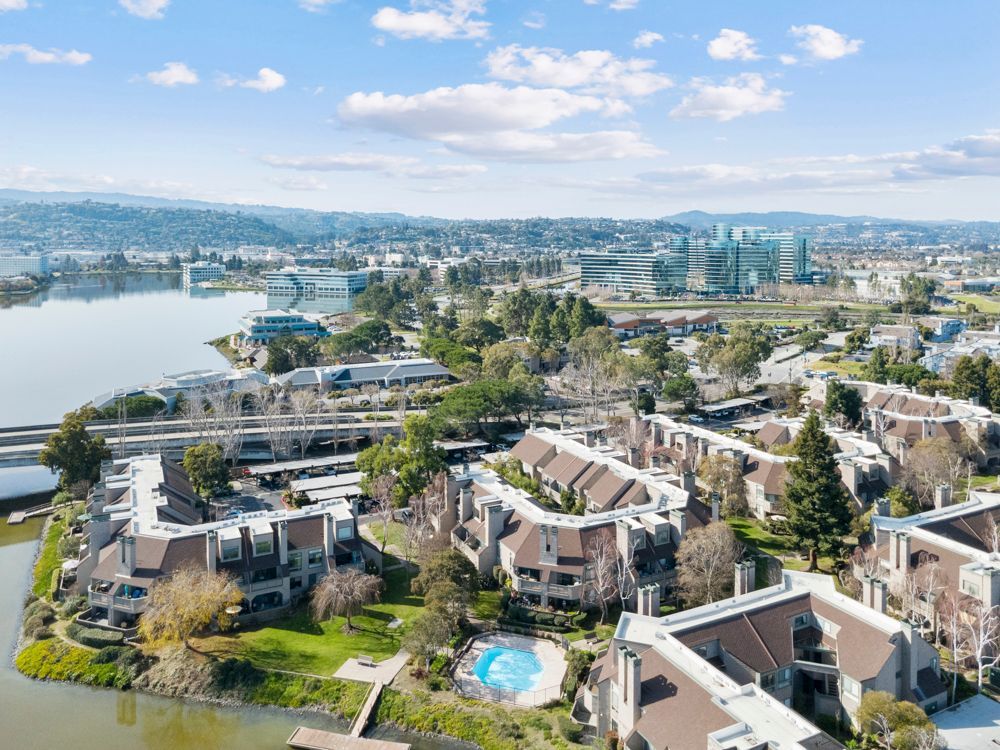
At the same time, the condo market remains significantly softer across much of the Peninsula. In fact, in several areas we are seeing condo prices decline rather than rise. Buyer demand exists, but activity is noticeably slower compared to the single-family segment.
There are several reasons for this, but the top two I think are:
- First, affordability pressure remains very real. Even though mortgage rates have stabilized somewhat compared to prior peaks, borrowing costs are still substantially higher than what many buyers became accustomed to several years ago.
- Second, HOA fees have become a much larger factor in buyer decision-making. In many condo communities, monthly HOA dues combined with mortgage payments, insurance, and taxes are pushing ownership costs significantly higher than buyers anticipated.
Affordability pressures across the Bay Area continue reshaping buyer behavior, especially for attached housing where ongoing carrying costs weigh heavily into the monthly payment equation. For some buyers, especially first-time buyers, the math becomes difficult to justify when renting comparable space may currently cost less each month than ownership.
That does not mean condos are a bad investment. It simply means buyers are approaching them much more selectively than before.
Townhomes Have Become the Middle Ground
The townhome market sits somewhere between these two extremes.
Townhomes are generally performing better than condos, but they are not seeing the explosive competition we are witnessing in single-family homes. Activity is steadier and more stable. For many buyers, townhomes represent a compromise: more space and functionality than a condo, but at a lower price point than a detached home.
However, pricing remains critical here as well. Well-priced townhomes move. Overpriced townhomes often sit. This is why looking only at broad countywide statistics can sometimes be misleading. Different product types are behaving like entirely different markets.
What Should Sellers and Buyers Keep in Mind?
For sellers, the biggest mistake right now is assuming that strong headlines guarantee strong results. Success today depends on strategy.
The sellers seeing extraordinary outcomes are typically the ones who:
- price competitively from the start,
- understand their buyer pool,
- prepare the home thoroughly,
- and align presentation with market expectations.
The market is still highly competitive for the right homes. But buyers are rewarding value and ignoring excess.
For buyers, there is both challenge and opportunity in today’s market. Yes, single-family homes remain highly competitive. Buyers need to be financially prepared and emotionally ready to act quickly when the right property appears.
At the same time, the softer condo and steadier townhome markets may offer opportunities that did not exist several years ago. Buyers willing to evaluate different property types carefully may find more negotiating leverage and better long-term entry points.
For both buyers and sellers, understanding which segment you are operating in matters more now than at almost any point in recent years.
A Market That Rewards Clarity
This market may feel inconsistent from the outside, but underneath it there is actually a very logical pattern. Homes that align with buyer expectations are rewarded aggressively. Homes that do not are filtered out quickly.
That is why strategy matters more than ever.
The best time to start your strategy was yesterday. The next best time is today. 😉
If you are thinking about buying or selling in Foster City, San Mateo, or elsewhere on the Peninsula, let us build a plan based on the realities of today’s market, not yesterday’s assumptions.
April 2026 Market Reports
Below you'll find market information for San Mateo County, the City of San Mateo, and Foster City

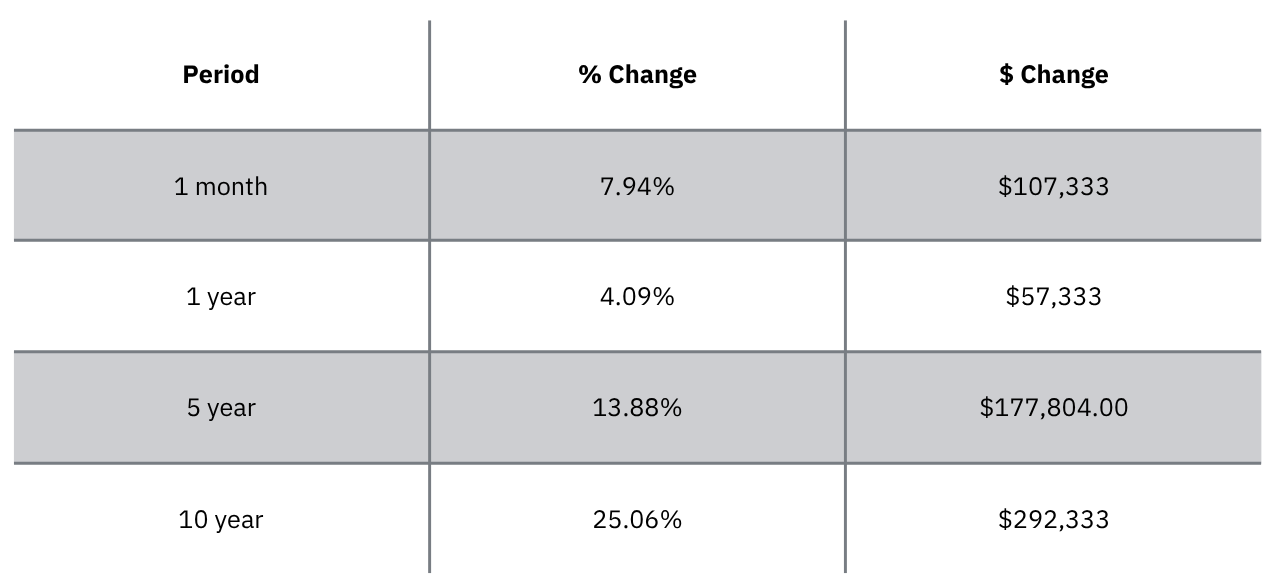
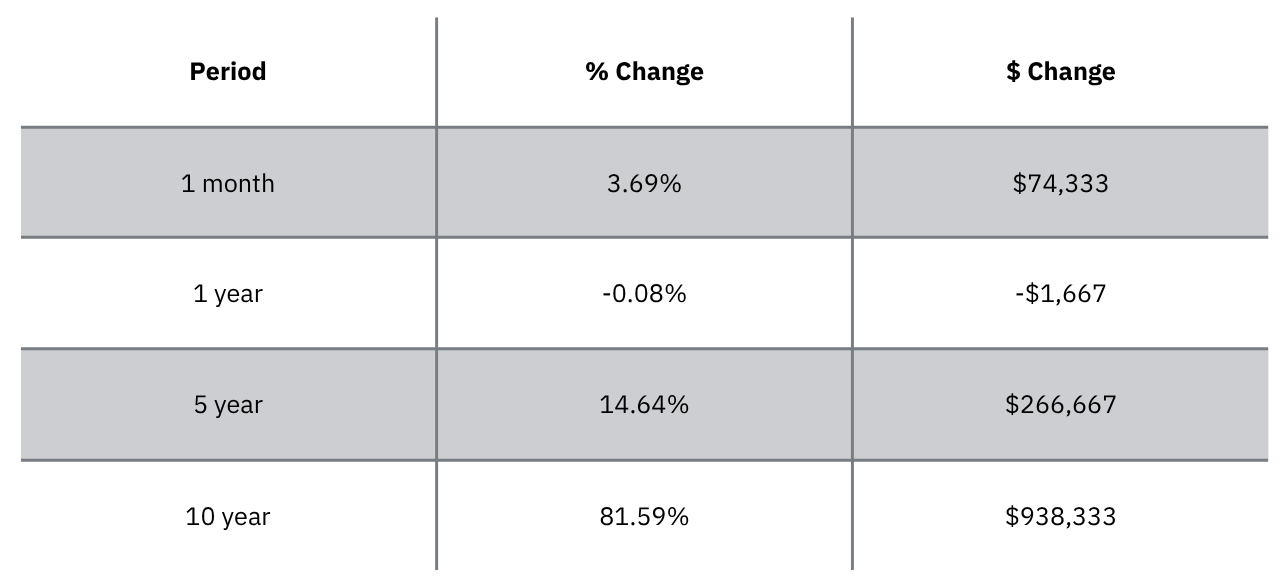
San Mateo County Equity Report. This report covers changes in median home sales prices over the last month, year, five years, and ten years using rolling 3-month data.
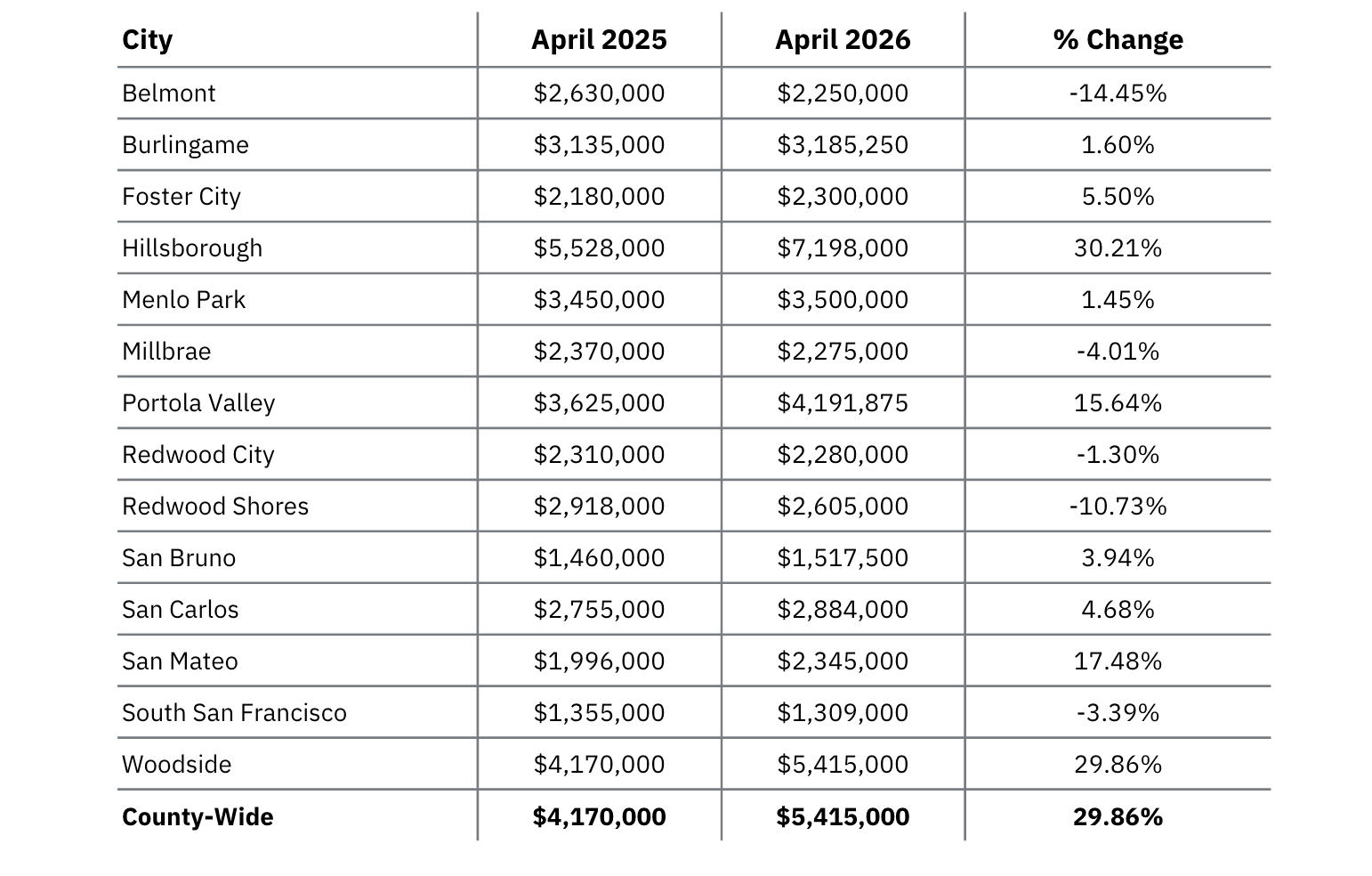
San Mateo County Market Report.
This report covers changes in median home sales prices, comparing year-over-year data for a single month.

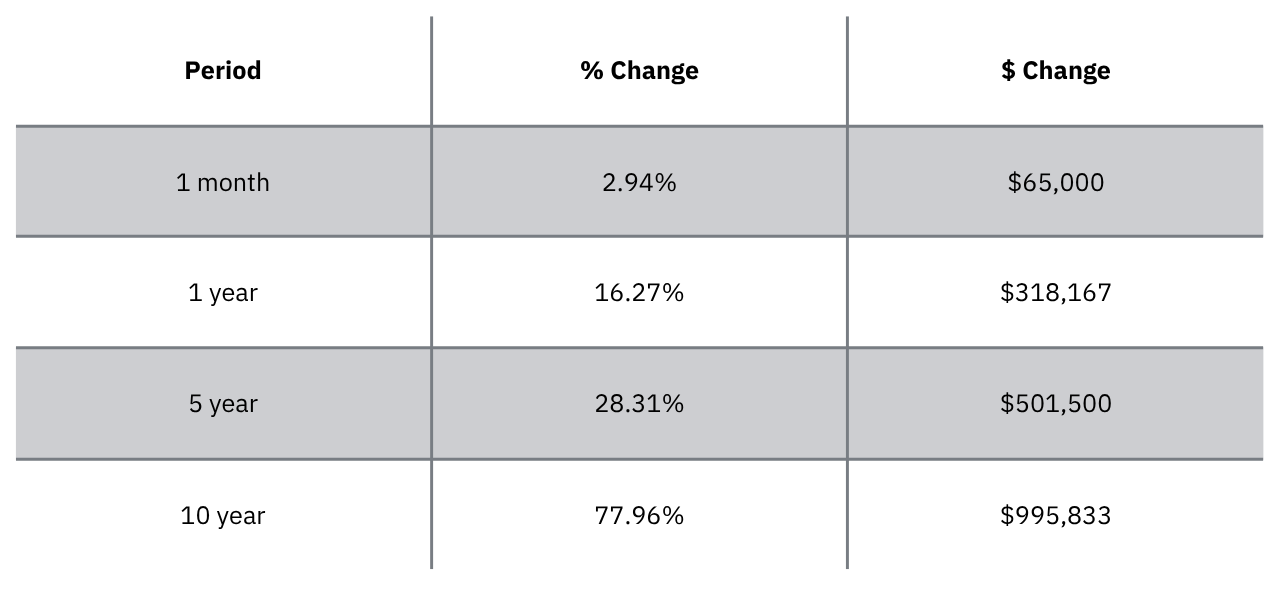
San Mateo City Equity Report.
This report covers changes in median home sales prices over the last month, year, five years, and ten years using rolling 3-month data.
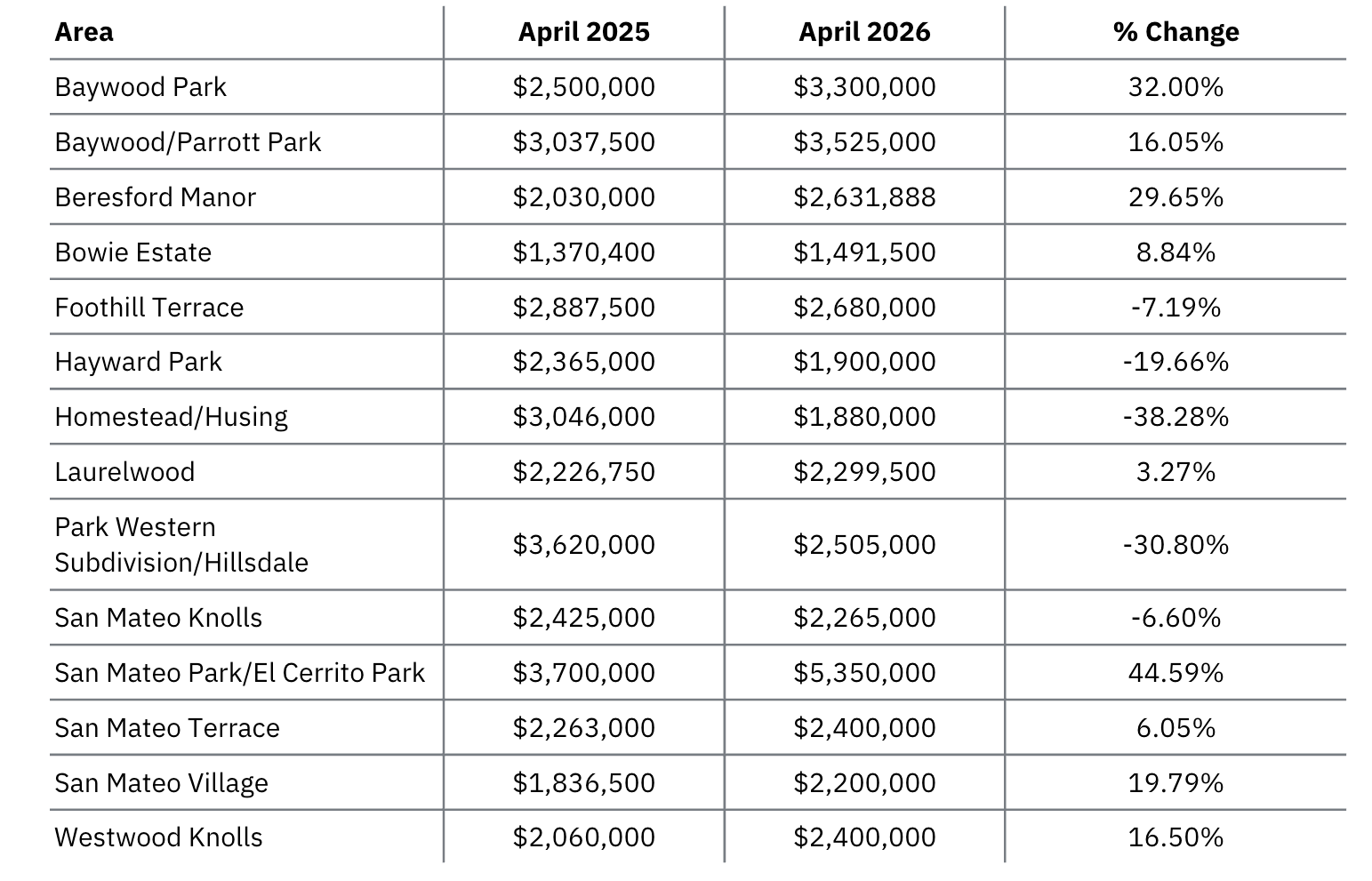
San Mateo City Market Report.
This report covers changes in median home sales prices, comparing year-over-year data for a single month.

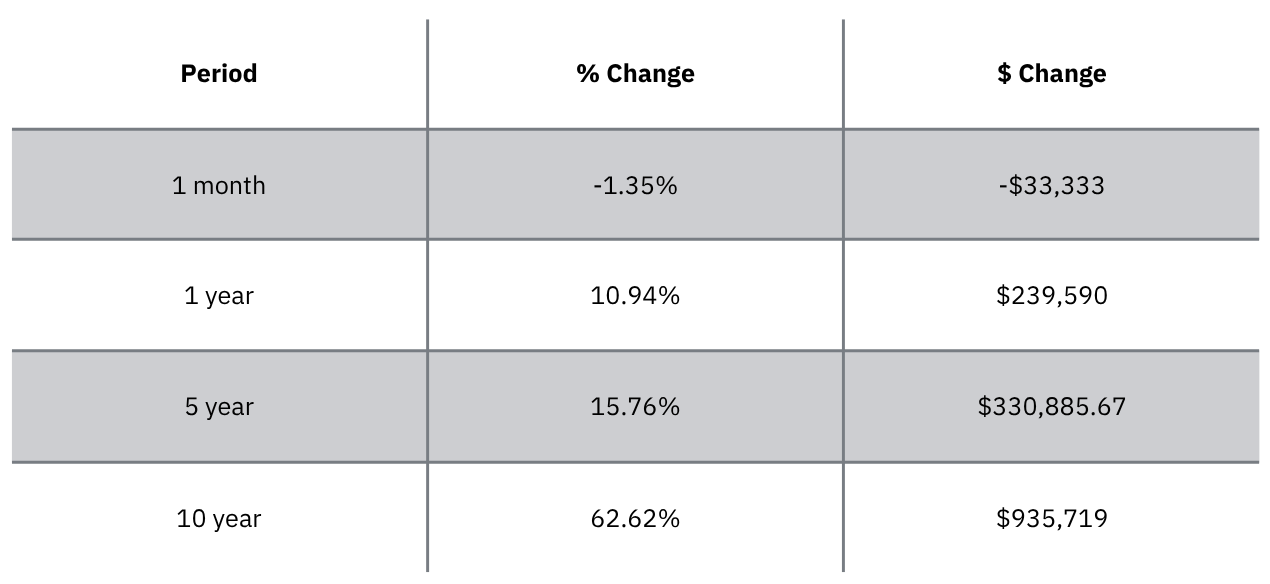
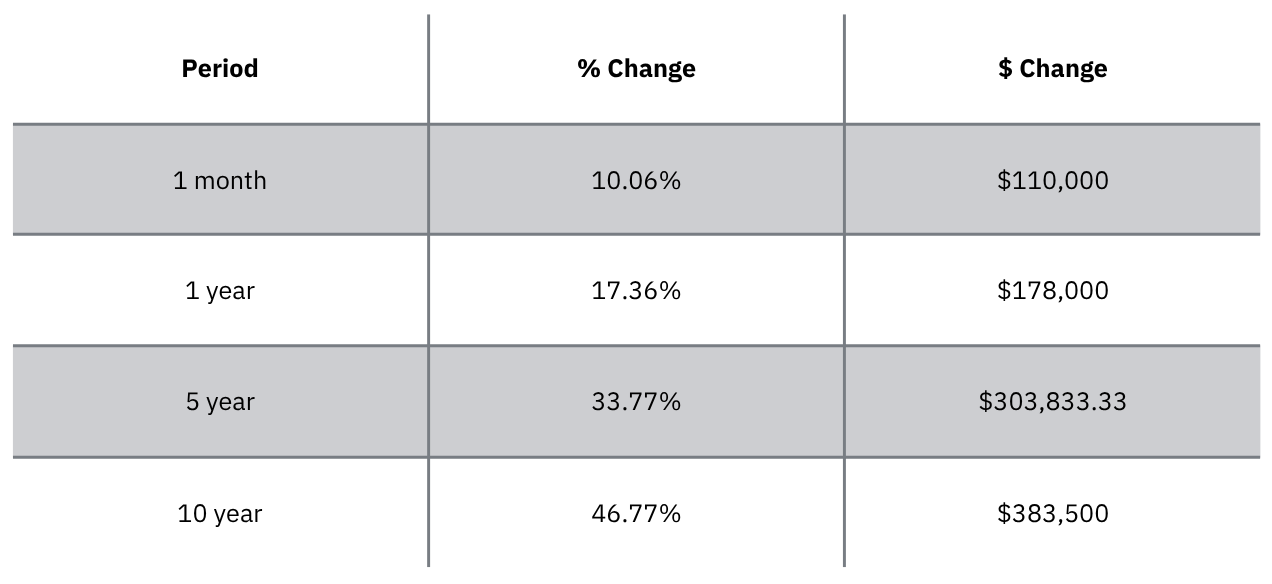
Foster City Equity Report. This report covers changes in median home sales prices over the last month, year, five years, and ten years.
Please note: With very few homes sold in this period, the median prices do not necessarily reflect market trends
Single Family Residences
Condominiums
Townhomes