A 1031 Exchange Doesn't Have to Mean Another Rental Property
Why understanding your options, and your market, can open more doors than you think.
One of the biggest misconceptions I hear from property owners is that a 1031 exchange means selling one rental property only to buy another rental property.
For many investors, that assumption can be enough to keep them from exploring their options. After all, if you're tired of managing tenants, handling maintenance requests, coordinating repairs, or simply dealing with the day-to-day responsibilities of property ownership, trading one property for another may not sound particularly appealing.
The reality is that a 1031 exchange can provide far more flexibility than most people realize.
Over the past several months, I've helped multiple clients successfully navigate 1031 exchanges. While every situation is different, one common theme has emerged: many property owners are surprised by the number of options available to them once they begin planning strategically.
And that planning often starts much earlier than people think.
Why More Investors Are Exploring Their Options
Today's investors are evaluating more than just property appreciation.
Some are approaching retirement and looking to simplify their lives. Others want to reduce management responsibilities while preserving long-term wealth-building opportunities. Some are seeking different types of investments that better align with their current goals.
The reasons may vary, but the objective is often the same: creating a strategy that works not only financially, but personally as well.
That is why I encourage clients to begin the conversation long before they ever list their property. A successful 1031 exchange is rarely about reacting to a sale. It is about creating a roadmap before the process begins.
The First Step Is Understanding Today's Market
Before we discuss what comes next, we first need to understand the likely performance of the property you already own.
That matters because different property types are moving at very different speeds in today's San Mateo County market. Single-family homes in Foster City, San Mateo, and throughout much of the Peninsula continue to see strong buyer demand, often attracting multiple offers and selling quickly when priced appropriately. Townhomes remain relatively stable, while condos generally require more patience due to higher interest rates and HOA costs affecting affordability.
Why is this important? Because the market for your property directly impacts your exchange timeline. A single-family home that receives multiple offers during the first week may start the 1031 clock much sooner than expected, while a condo or townhome may provide a longer runway for decision-making.
Understanding those likely outcomes before listing your property helps ensure your exchange strategy is proactive rather than reactive.
Structuring a Successful 1031 Exchange
One of the most common mistakes investors make is waiting until their property sells before deciding what comes next. The most successful exchanges are usually planned months in advance. Before listing a property, I encourage clients to think through several important questions:
- What are your long-term financial goals?
- Do you want to continue actively managing property?
- Are you looking to increase cash flow?
- Do you want to diversify geographically?
- Are you planning for retirement, estate planning, or wealth preservation?
Once we understand those goals, we can begin evaluating options before the exchange deadlines become a factor.
Many investors assume they must stay local. In reality, a 1031 exchange can provide opportunities throughout the Bay Area, across California, or even in other states. Some clients choose to exchange into larger investment properties. Others move into markets with different growth or income characteristics. Some prioritize simplicity and reduced management responsibilities.
The important thing is identifying the right strategy before your property ever hits the market. Through my network, I can also connect clients with trusted agents, investment specialists, and property management resources throughout California and beyond, helping ensure they have the right team in place wherever their next investment may be.
The Option Many Property Owners Don't Know Exists
One of the most interesting conversations I have with clients considering a 1031 exchange involves an option they often have never heard of: a Delaware Statutory Trust, commonly referred to as a DST.
A DST is an investment structure that may qualify under 1031 exchange rules while allowing investors to own a fractional interest in institutional-quality real estate rather than directly purchasing and managing an entire property themselves. For some investors, this can be an attractive alternative. Instead of purchasing another rental property, managing tenants, coordinating repairs, and handling ongoing operational responsibilities, a DST allows investors to participate in professionally managed real estate while potentially preserving the tax-deferred benefits of a 1031 exchange.
For property owners who are ready to step back from active management, this can be a compelling option. Of course, every investor's situation is different, and DSTs are not appropriate for everyone. However, they are often overlooked simply because many property owners do not know they exist.
The good news is that you have options.
Planning Creates Opportunity
Whether you own a single-family home in Foster City, a condo in San Mateo, a townhome elsewhere on the Peninsula, or an investment property anywhere in San Mateo County, the most successful 1031 exchanges begin with a plan.
Understanding today's market helps determine your timeline. Understanding your goals helps determine your options. And sometimes those options are broader, and simpler, than you may have imagined.
If you're considering a 1031 exchange and would like to explore your options, I'd be happy to help you evaluate your property, understand today's market conditions, and build a strategy that aligns with your long-term goals.
May 2026 Market Reports
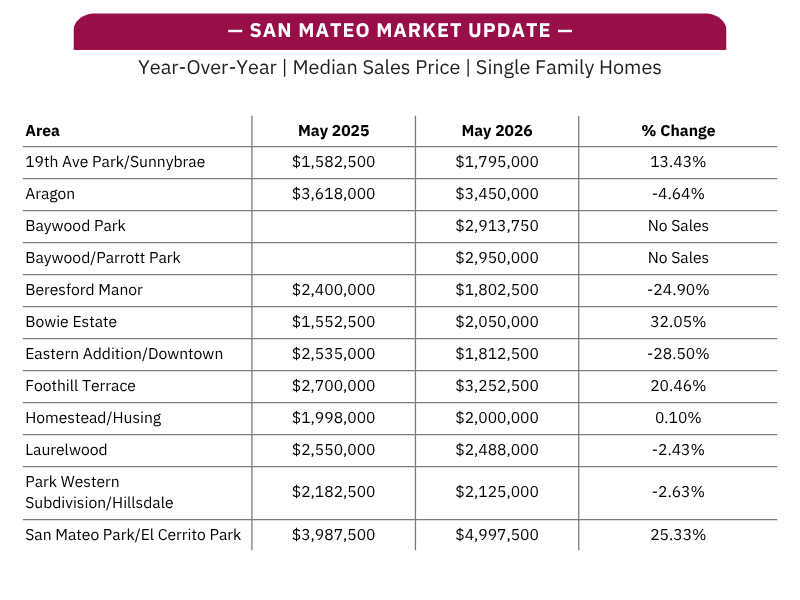
Below you'll find market information for San Mateo County, the City of San Mateo, and Foster City

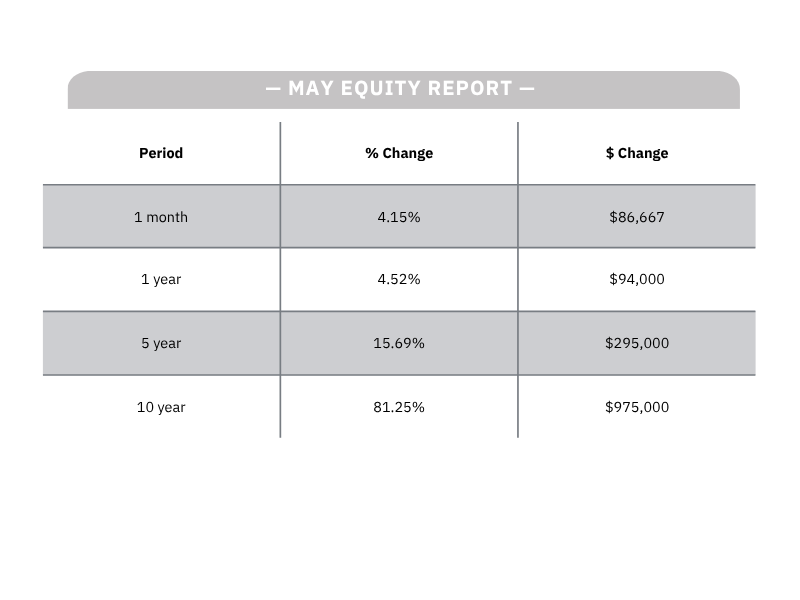
San Mateo County Equity Report. This report covers changes in median home sales prices over the last month, year, five years, and ten years using rolling 3-month data.
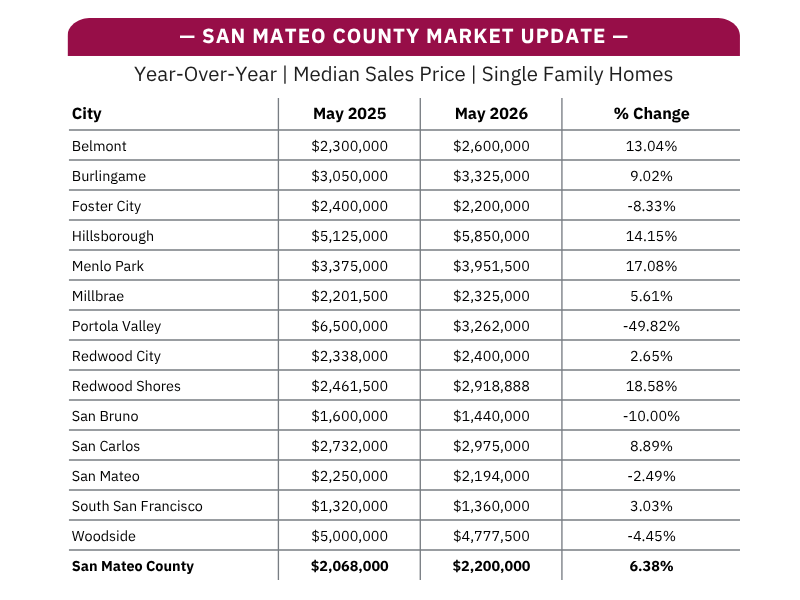
San Mateo County Market Report.
This report covers changes in median home sales prices, comparing year-over-year data for a single month.
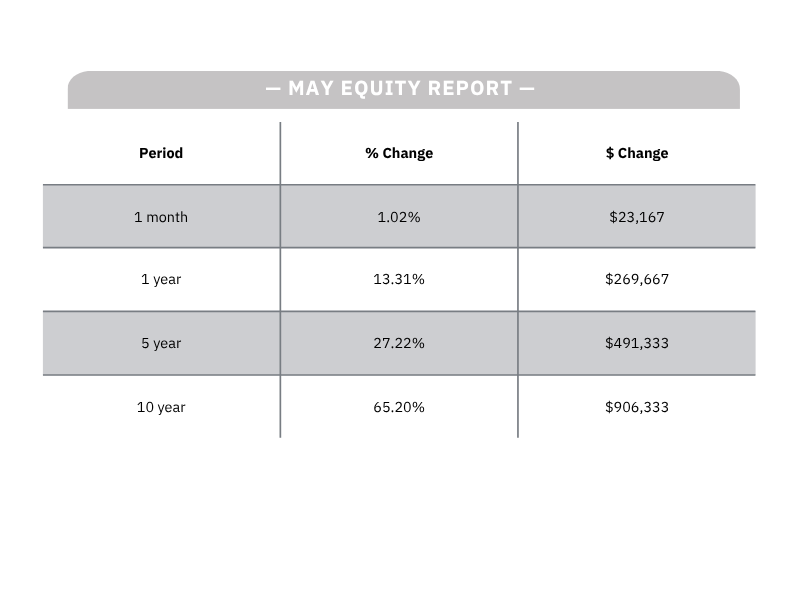
San Mateo City Equity Report.
This report covers changes in median home sales prices over the last month, year, five years, and ten years using rolling 3-month data.
San Mateo City Market Report.
This report covers changes in median home sales prices, comparing year-over-year data for a single month.
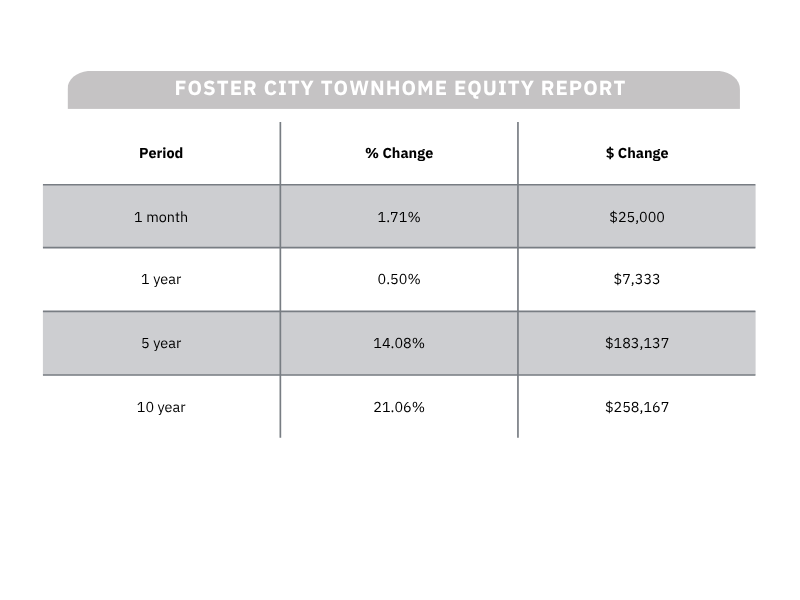
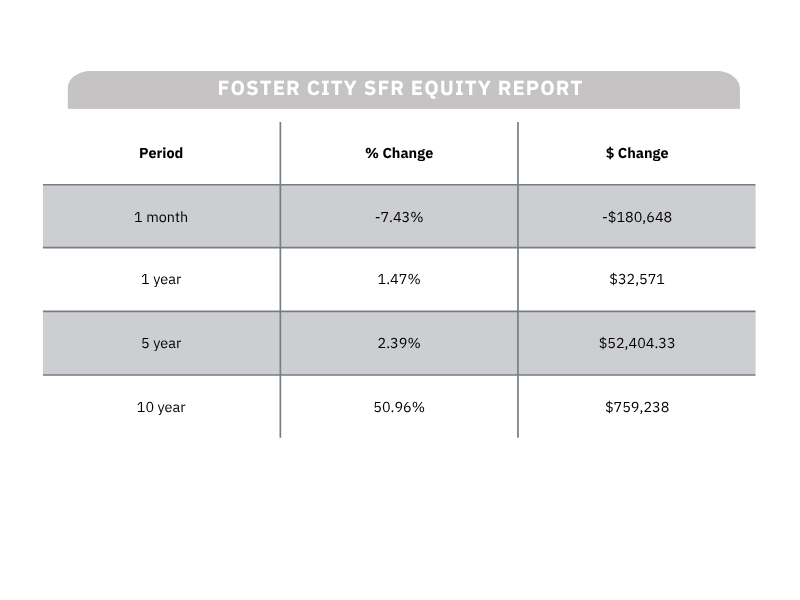
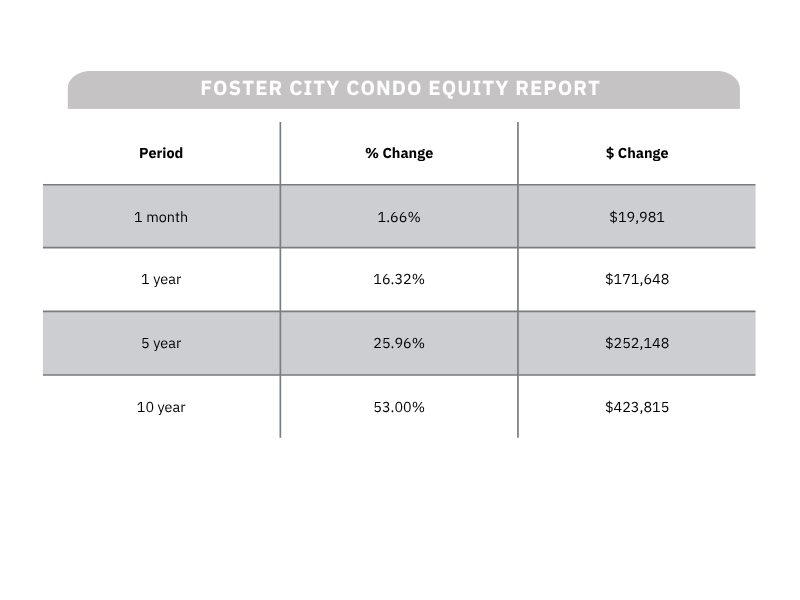
Foster City Equity Report. This report covers changes in median home sales prices over the last month, year, five years, and ten years.
Single Family Residences
Condominiums
Townhomes